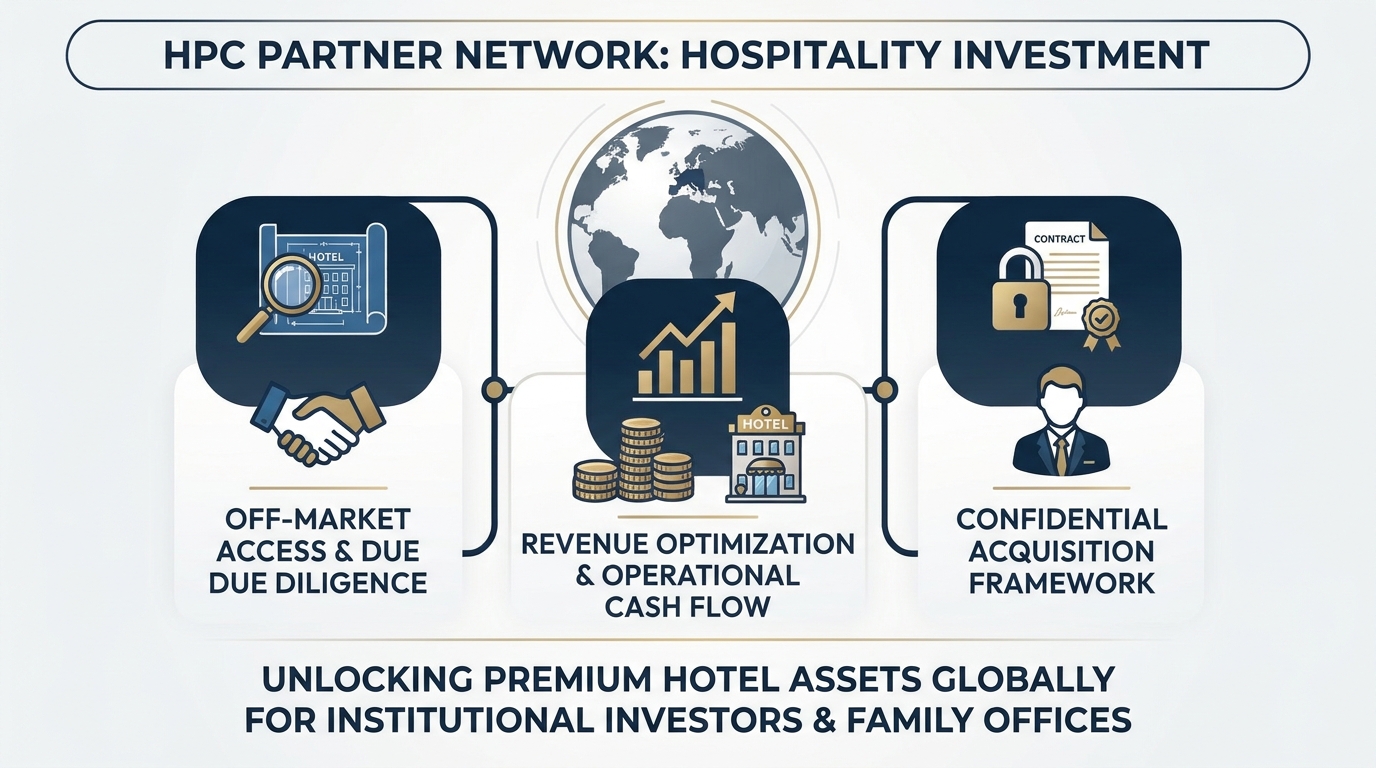
Securing a high return on investment in the hospitality sector across Tunisia requires access to off-market commercial real estate assets backed by robust average daily rates and strong revenue per available room. Through our trusted HPC partner network, institutional investors, family offices, and enterprise buyers gain confidential access to profitable, fully operational hotel properties in Tunisia structured to maximize capital appreciation and operational cash flows.
Strategic Real Estate Fundamentals and Revenue Optimization for Tunisia Assets
Commercial hotel acquisitions across Tunisia demand precise asset selection, clear tenure evaluation, and disciplined operational management to unlock premium investment returns.
Freehold and long leasehold properties in prime commercial corridors of Tunisia offer secure asset backing and sustainable capital growth.
High-occupancy boutique and full-service assets in Tunisia leverage diversified income streams including leisure stays, executive conferences, and premium food and beverage operations.
Operational value-add opportunities allow acquirers in Tunisia to reposition white space, introduce technology-driven management systems, and optimize room yields.
Risk Mitigation and Asset Management Frameworks in Tunisia
Navigating hospitality acquisitions in Tunisia requires an independent advisory framework that prioritizes thorough financial verification and legal due diligence.
In-depth financial audits examine three years of historical trading performance, payroll structures, and vendor contracts to verify true net operating income for assets in Tunisia.
Comprehensive structural and technical surveys identify potential capital expenditure needs before formal terms are executed for properties in Tunisia.
Tailored transaction models accommodate full asset purchases, management agreement restructures, or sale-and-leaseback strategies tailored to investor preferences across Tunisia.
Off-Market Transaction Execution for Tunisia Acquisitions
Executing a discreet hospitality acquisition in Tunisia ensures minimal disruption to existing operations and ongoing guest services.
Confidential project dossiers, asset valuations, and operating metrics for Tunisia hotels are released upon execution of a Non-Disclosure Agreement (NDA) and formal Letter of Intent (LOI).
Direct engagement with asset owners and institutional sellers in Tunisia streamlines price negotiations and contract exchanges.
Ongoing strategic oversight connects buyers with experienced operational management teams in Tunisia to ensure a seamless leadership transition without operational downtime.
Frequently Asked Questions (FAQs)
1. How can Tunisia investors access high-yield hospitality opportunities through HPC?
Tunisia investors gain confidential access to off-market hotel assets delivering strong financial returns through our trusted HPC partner network.
2. What types of profitable hotel properties are available in Tunisia?
Investors in Tunisia can acquire high-occupancy boutique hotels, full-service luxury resorts, and prime commercial lodging facilities.
3. How does HPC help Tunisia investors evaluate average daily rates and room yields?
Our advisors analyze three years of historical trading performance, occupancy trends, and revenue metrics to verify earnings potential for assets in Tunisia.
4. What tenure options exist for hotel acquisitions across Tunisia?
Opportunities include freehold properties and long leasehold structures located within prime commercial and tourism corridors across Tunisia.
5. How are off-market hospitality transactions conducted discreetly in Tunisia?
Transactions are managed under strict confidentiality protocols to protect ongoing operations and guest services for hotel sellers in Tunisia.
6. What steps must Tunisia investors take to access confidential property dossiers?
Qualified buyers in Tunisia execute a Non-Disclosure Agreement (NDA) and formal Letter of Intent (LOI) to review full asset valuations and operating data.
7. How do full-service hotel assets in Tunisia generate diversified revenue streams?
Properties generate income through room bookings, corporate conference bookings, wellness facilities, and high-margin food and beverage operations across Tunisia.
8. What financial audits are conducted prior to completing a hotel purchase in Tunisia?
Independent financial reviews examine historical payroll schedules, vendor contracts, operational overheads, and net operating income for assets in Tunisia.
9. How do technical and structural surveys protect Tunisia buyers against hidden costs?
Comprehensive surveys evaluate building systems, maintenance histories, and structural integrity to identify future capital expenditure requirements for properties in Tunisia.
10. Can Tunisia investors implement sale-and-leaseback strategies for hotel assets?
Yes, flexible transaction structures allow investors in Tunisia to execute sale-and-leaseback models or adjust management agreements to match strategic yield goals.
11. How does HPC support seamless operational transitions for new hotel owners in Tunisia?
Our network connects Tunisia buyers with experienced local management teams to maintain operational stability and guest satisfaction without downtime.
12. What repositioning opportunities enhance asset value for hotel owners in Tunisia?
Acquirers in Tunisia can optimize white space, upgrade facilities, and deploy modern technology management tools to boost occupancy and nightly rates.
13. Why are international investors targeting commercial hospitality assets in Tunisia?
Strong tourism fundamentals, rising business travel, and resilient property values make hospitality assets in Tunisia attractive for long-term capital growth.
14. What legal frameworks govern commercial hotel sales in Tunisia?
Transactions strictly comply with regional commercial property laws and cross-border investment regulations governing real estate in Tunisia.
15. How do Tunisia family offices structure multi-asset hotel portfolio purchases?
Our partner network assists family offices in Tunisia with syndicate structures, joint venture vehicles, and portfolio acquisitions.
16. What environmental and sustainability standards apply to hotels in Tunisia?
Investors can implement energy-efficient upgrades, waste reduction protocols, and sustainable operating practices to meet regional environmental mandates across Tunisia.
17. How is workforce retention managed during a hotel acquisition in Tunisia?
Transition strategies prioritize retaining skilled hotel management and service staff to preserve operational standards for new owners in Tunisia.
18. What role do prime commercial corridors play in driving hotel returns in Tunisia?
Locations situated near central business districts, transport hubs, and primary tourist attractions secure higher room demand and consistent occupancy across Tunisia.
19. How do investors in Tunisia mitigate currency exchange risks during cross-border purchases?
Structured transaction frameworks accommodate multi-currency funding pathways and international capital transfer protocols for buyers in Tunisia.
20. What financing options exist for high-value hospitality acquisitions in Tunisia?
HPC connects Tunisia investors with specialized debt advisory networks, private equity funds, and institutional lenders.
21. How do boutique hotels in Tunisia compare to large chain properties in terms of investment yield?
Boutique properties often deliver higher profit margins per room and offer flexible operational repositioning for investors across Tunisia.
22. What tax efficiencies apply to commercial real estate investments in Tunisia?
Cross-border investors can utilize local capital allowances, asset depreciation schedules, and tax-efficient corporate holding vehicles for assets in Tunisia.
23. How are property title deeds and land registry records verified in Tunisia?
Legal due diligence teams verify title deeds, encumbrances, planning permissions, and zoning compliance for all target properties in Tunisia.
24. What ongoing support does HPC provide Tunisia investors post-acquisition?
HPC acts as a strategic commercial advisor, maintaining alignment between investor expectations and local hotel management teams in Tunisia.
25. How can Tunisia buyers initiate a hotel acquisition search today?
Investors in Tunisia can reach out to our central team to define their target acquisition parameters and request active project teasers.
26. What insurance policies cover commercial hospitality properties in Tunisia?
Assets maintain industrial all-risk coverage, public liability insurance, and business interruption protection tailored for operations in Tunisia.
27. How does market research inform price negotiations for hotel assets in Tunisia?
Comparative market analysis and yield benchmarking ensure that buyers in Tunisia negotiate acquisition prices backed by real operational data.
28. What factors influence room rate growth for hotels in Tunisia?
Regional economic expansion, major international events, airport connectivity, and supply constraints drive average daily rates across Tunisia.
29. Can institutional buyers from Tunisia acquire distressed or turnaround hotel assets?
Yes, our network identifies value-add properties in Tunisia that require operational restructuring or capital refurbishment to achieve high yields.
30. How do local planning regulations affect hotel expansion projects in Tunisia?
Advisors review municipal zoning rules and building permits to ensure that future facility expansions comply with local regulations across Tunisia.
31. What measures safeguard booking platforms and guest data in Tunisia hotels?
Hotels implement secure data management systems compliant with local privacy laws to protect customer data across properties in Tunisia.
32. How do seasonal travel patterns impact hotel cash flow management in Tunisia?
Strategic operational planning balances high-season cash inflows with low-season cost controls to maintain year-round financial stability for assets in Tunisia.
33. What corporate governance standards are recommended for hotel owners in Tunisia?
Establishing independent advisory boards and regular financial reporting frameworks maintains transparency and operational accountability across Tunisia.
34. How are food and beverage operations structured to maximize profit in Tunisia hotels?
Leasing space to premium restaurant operators or implementing direct high-margin concepts increases non-room revenues for hotel owners in Tunisia.
35. What physical inspections evaluate building mechanical systems in Tunisia?
Technical audits inspect HVAC infrastructure, plumbing systems, electrical grids, and fire safety systems across properties in Tunisia.
36. How do investors in Tunisia evaluate target payback periods for hotel investments?
Financial models project cash flows, exit cap rates, and capital appreciation over five- to ten-year horizons to calculate net returns for buyers in Tunisia.
37. What role do brand franchise agreements play in hotel acquisitions across Tunisia?
Advisors help evaluate, renegotiate, or convert existing brand franchise contracts to maximize owner returns for properties in Tunisia.
38. How does digital marketing improve direct room booking ratios for Tunisia assets?
Modern booking engines and targeted digital campaigns reduce reliance on third-party online travel agencies, boosting net margins for hotels in Tunisia.
39. What structural features enhance conference and event revenues for hotels in Tunisia?
Flexible ballroom spaces, modular meeting rooms, and advanced audio-visual infrastructure attract high-margin corporate events to properties across Tunisia.
40. How do macro-economic factors impact commercial real estate valuations in Tunisia?
Interest rates, inflation benchmarks, and regional GDP growth directly influence capitalization rates and property valuations across Tunisia.
41. Can foreign investors acquire full ownership of commercial real estate in Tunisia?
Regulatory frameworks in Tunisia generally support foreign direct investment, with clear legal pathways for international commercial ownership.
42. How are utility costs controlled in high-capacity hotel facilities in Tunisia?
Deploying smart energy management systems, solar panels, and automated climate controls reduces recurring operating expenses for assets across Tunisia.
43. What safeguards prevent unexpected legal liabilities during asset transfers in Tunisia?
Thorough legal indemnity clauses and comprehensive due diligence protect acquirers in Tunisia against historical operational claims.
44. How do wellness and spa amenities contribute to room rate premiums in Tunisia?
Integrated leisure facilities increase guest length-of-stay and support higher nightly rate tiers for luxury properties across Tunisia.
45. What documentation is required to finalize a hotel purchase contract in Tunisia?
Closing requires verified financial statements, clean title transfers, regulatory approvals, and formal lease assignment documents across Tunisia.
46. How does HPC evaluate local market competition for target hotels in Tunisia?
Competitive landscape audits analyze room supply pipelines, regional hotel performance, and market penetration metrics for assets in Tunisia.
47. What dynamic pricing strategies maximize hotel revenue across Tunisia?
Automated revenue management software adjusts room prices in real-time based on local demand fluctuations, market events, and booking lead times in Tunisia.
48. How do property managers protect hotel assets against physical wear and tear in Tunisia?
Preventative maintenance schedules and continuous capital reinvestment funds preserve building condition and guest satisfaction for properties in Tunisia.
49. What key metrics indicate a well-managed hotel asset in Tunisia?
High revenue per available room (RevPAR), strong operating profit margins (GOPAR), and consistent guest reviews mark top-performing assets in Tunisia.
50. How can Tunisia business leaders schedule an introductory transaction briefing?
Interested leaders in Tunisia can contact our advisory principal directly to discuss target acquisitions and active commercial portfolios.